
The life sciences industry is moving through a period of significant change. Patent expirations are reshaping portfolios. AI adoption is accelerating. Reorganizations and acquisitions continue to affect teams and careers. Policy and economic pressures are influencing business decisions across the ecosystem.
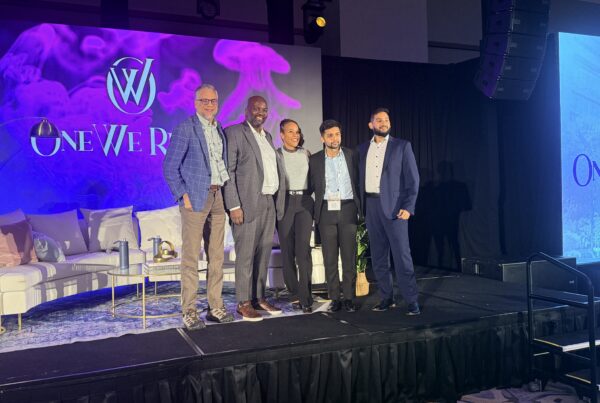
For professionals trying to understand what comes next, the challenge is rarely a lack of information. It is knowing which signals matter, how they connect, and what they could mean for your function, organization, and career. This message was at the heart of the September 10th OneWe Reach THRIVE session, Cracking the Code: Business Signals that Shape the Future. Through functional breakout discussions and a broader conversation about the forces reshaping life sciences, participants explored the trends they are watching most closely and the questions leaders should be asking as they prepare for 2027.
Three Forces Are Converging Across Life Sciences
One of the clearest takeaways from the conversation was that many of today’s business challenges cannot be viewed in isolation.
Three major forces emerged as particularly important:
- Patent cliffs and the organizational shifts they can trigger
- AI adoption at scale
- An increasingly volatile geopolitical and policy environment
Patent cliffs are a familiar industry reality, but their consequences extend well beyond the loss of exclusivity for a single product.
When a major revenue stream comes under pressure, organizations may reconsider portfolio priorities, investment decisions, partnerships, operating structures, and talent deployment. M&A activity and restructuring can follow, and teams may find themselves working toward different priorities with different resources in a relatively short period of time.
For professionals inside those organizations, understanding the patent cliff is therefore only part of the picture. The more useful question is what portfolio pressure could set in motion elsewhere in the business.
AI presents a different kind of challenge.
The conversation is moving beyond whether life sciences companies will use AI. Many already are. The more important questions now concern where it creates meaningful value, how quickly adoption will move, which capabilities organizations will build internally, where partnerships will matter, and how roles may change as the technology becomes embedded in everyday work.
Participants also raised questions about data sharing, collaboration, productivity, and the human judgment still required when new tools move from experimentation into consequential business processes.
Then there is the policy and geopolitical environment…
Participants raised questions about legislation, economic pressures, the flow of healthcare dollars, and the downstream implications of policy changes. These forces are influencing strategic decisions across the industry and creating a need for leaders who can understand the broader environment surrounding their function.
Follow the Connections, Not Just the Headlines
The breakout discussions reinforced how interconnected these signals have become.
Participants from strategy and business operations discussed the potential for AI and data sharing to create new forms of strategic partnership. Others pointed to the importance of understanding industry economics and policy direction when thinking about where organizations may invest next.
Professionals from R&D and clinical development emphasized AI as well, while also highlighting the need for leadership agility amid ongoing organizational change. As companies shift direction, change leadership, reorganize teams, or adopt new technologies, the ability to remain effective through uncertainty becomes a business capability in its own right.
Rare disease also surfaced across multiple functional conversations, including Commercial and Medical Affairs. Participants discussed the significant costs associated with rare disease and the strategic implications those costs create across development, manufacturing, commercialization, and patient care. The fact that the topic resonated across functions was itself a useful signal: many of the issues shaping life sciences increasingly require professionals to understand what is happening beyond the boundaries of their own roles.
Strategic Fluency Requires a Wider Field of View
Perhaps the larger lesson from the session was that staying current in life sciences requires more than tracking developments within your own discipline.
A Medical Affairs leader may need to understand competitive pressure and portfolio strategy. A commercial professional may need greater visibility into manufacturing economics and policy shifts. An R&D leader may need to think about AI, workforce implications, and organizational agility alongside scientific innovation.
That broader perspective can help professionals recognize connections earlier and ask better questions about what those signals could mean. The goal is not to predict every change. It is to build enough strategic awareness to respond thoughtfully when change arrives.
STAY TUNED FOR DETAILS ABOUT OUR FINAL Q4 SESSION!