
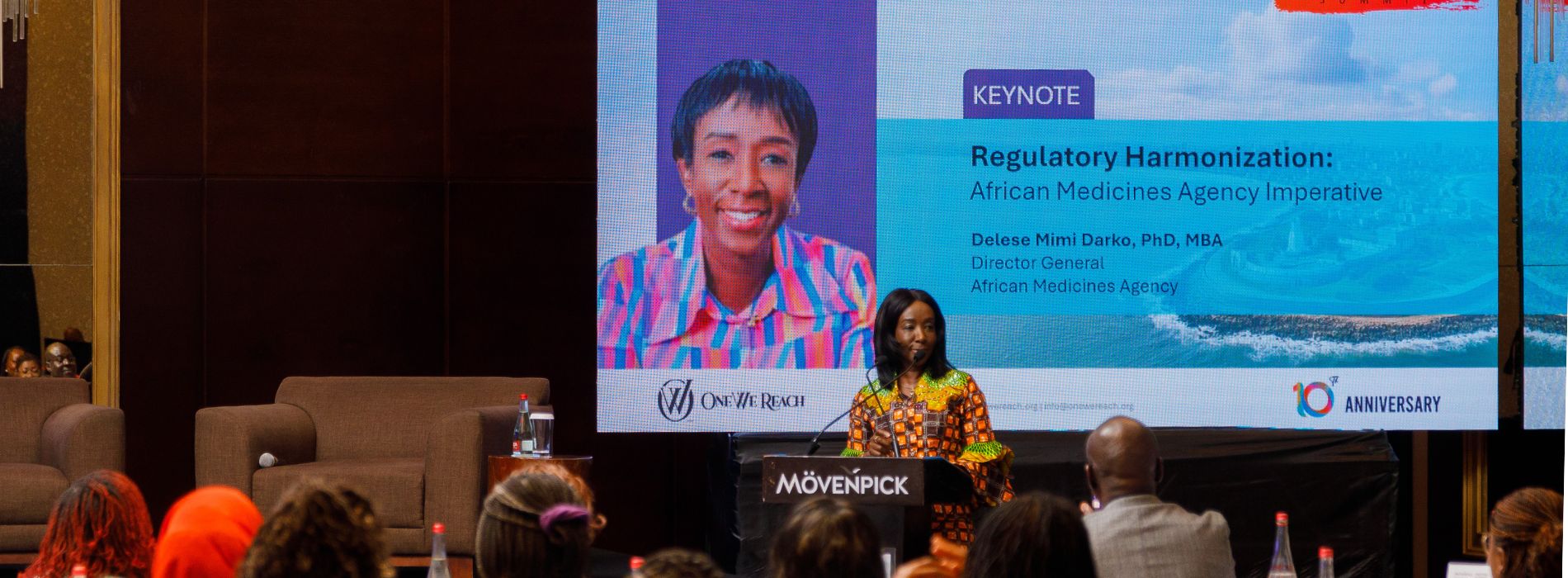
HE Dr. Delese Mimi Darko on the African Medicines Agency at OneWe Reach’s 4th Global Conversations & Connections Summit
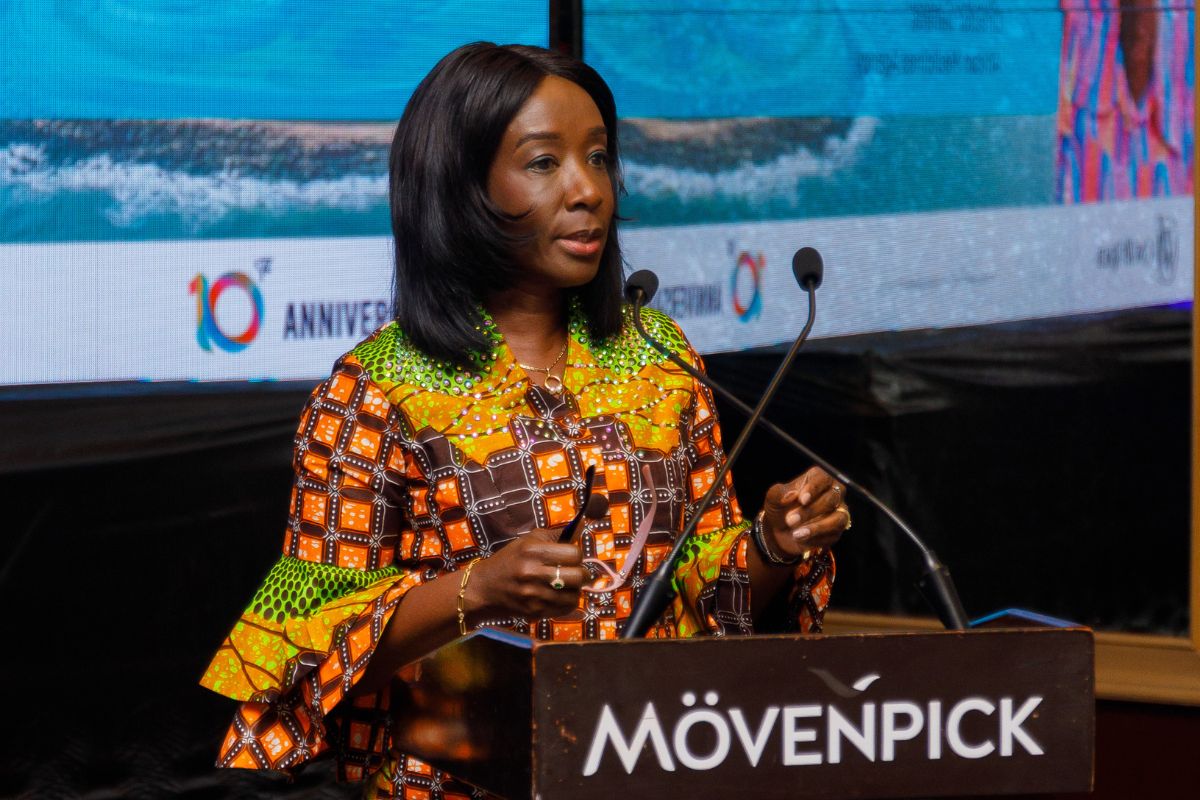
At the 4th Global Conversations & Connections Summit in Accra, HE Dr. Delese Mimi Darko, inaugural Director General of the African Medicines Agency (AMA), delivered the keynote address and sat for a fireside chat with Dr. Vickie Laurent, OneWe Reach Board of Director and Global Regulatory Affairs Leader. Across the session, she made an argument that reframes how industry, investors, and partners should think about the continent.
The Real Barrier to Access Is Not Science. It Is Structure.
Dr. Darko’s central thesis was that Africa has never lacked science. Innovation is happening, testing is happening, and the continent is producing credible scientific work. What has been missing is the structural and systemic infrastructure to translate that science into access. For too long, Africa participated in global health without shaping it. COVID-19 made the cost of that dynamic visible in real time. While Europe acted as one, Africa acted as many. Ghana called South Africa. South Africa called Egypt. Approvals happened country by country. The continent got its vaccines, eventually, but the delay was not a scientific problem — it was a coordination problem, and the research opportunities that fragmentation destroyed are not recoverable.
AMA, in her framing, is not a technical reform. It is a correction of a structure that is defective. The agency will coordinate — not replace — the 55 national regulatory authorities (NRAs) across the continent, delivering one application, one scientific review, and one decision for the categories of products that fall within its remit: vaccines, biologicals, complex products, products for neglected and rare diseases, and designated medical devices. NRAs retain sovereignty over final marketing authorization, post-market monitoring, and enforcement. AMA adds scale, speed, and predictability where fragmentation has been costing everyone — patients, regulators, industry, and investors.
For sponsors, the operational implication is direct. The greatest barrier to medicines access in Africa is not the absence of science. It is the absence of a coordinated regulatory pathway. AMA is that pathway.
AMA Is Not Starting From Scratch. It Is Open for Business.
One of Dr. Darko’s most emphatic points was that AMA is building on more than a decade of groundwork, not inventing a system from first principles. Two foundations matter. The African Medicines Regulatory Harmonization (AMRH) initiative built the technical committees, joint review procedures, and harmonized guidelines that made continental coordination possible under a voluntary framework. The African Vaccines Regulatory Forum (AVAREF), which Dr. Darko chaired for approximately a decade, built the same infrastructure for clinical trials. Ten products have already been reviewed continentally under AMRH. A medical device pilot under AMA has already concluded. Lenacapavir is among the products of active continental interest.
What AMA does differently is institutionalize that work inside a treaty-based legal entity. The technical committees that existed under AMRH are being formally re-established inside AMA with representation across all of Africa’s regional economic communities, subject to governing board approval. The practical consequence is that if a sponsor brought an application to AMA today, the scientific expertise, review process, and coordination mechanisms are already in place to act on it. AMA is not a promise. It is operational.
The treaty was adopted in 2009, entered into force in 2021, and became operational in October 2025 when Dr. Darko assumed office at AMA headquarters in Kigali. At the time of her remarks, 31 of 55 African Union member states had signed and ratified. Nigeria and South Africa had not yet signed at the time of her remarks, but Dr. Darko indicated that both were expected to ratify imminently. She explicitly asked industry to use its influence to support broader ratification — because when a health emergency lands in a non-ratified state, AMA’s ability to coordinate directly is constrained.

Engage Early. That Goes for AMA — and for African KOLs.
Several concrete details emerged across the keynote and fireside chat that matter for anyone planning an African regulatory strategy.
The OneWe Reach Take
The analysis below represents OneWe Reach’s interpretation, not Dr. Darko’s direct statements.
Dr. Darko’s remarks land at a moment when the global biopharma industry is actively looking for its next source of durable growth. The patent cliff is here. Mature markets are flat. And Africa’s demographic and epidemiological trajectory — a population on course to exceed 2.5 billion by 2050, a projected doubling of the diabetes burden from 24 million in 2021 to 55 million by 2045, and rising non-communicable disease prevalence — makes the continent impossible to treat as a development-aid question. IQVIA has forecast the African pharmaceutical market at approximately $25 billion in 2022, growing to $34 to $40 billion by 2027 depending on universal healthcare rollout.
What AMA offers is the structural unlock that converts 54 fragmented markets into one coherent regulatory geography. Sponsors who engage AMA early, who integrate African KOLs into upstream development, and who invest in coordinated regulatory science capacity building will be operating with a different risk profile than sponsors still treating the continent as a late-stage add-on.
A balanced view recognizes that AMA is in the build phase of an ambitious continental mandate, and the scope of what is underway is significant. Technical committee institutionalization, the digital intake platform, AfriVigilance, and the reliance MOUs with EMA, FDA, WHO, and ICH are actively progressing on parallel tracks. Treaty ratification continues to advance, with Dr. Darko signaling that additional major economies are moving toward signing. The 180-day review target is a commitment AMA is working to deliver against, informed by the AMRH joint review experience. And the work to coordinate partner capacity-building is a priority AMA is actively leading. None of this is a finished picture — but that is exactly why Dr. Darko’s call for early, coordinated engagement matters. The sponsors, partners, and institutions that show up now, while the system is being built, will help shape how it delivers.
About OneWe Reach
OneWe Reach is a global strategic intelligence organization advancing health outcomes for all across the life sciences. Our Global Conversations & Connections Summit convenes industry, regulators, investors, clinicians, and African scientific and professional leaders around the structural questions that shape access and opportunity on the continent.
Learn more at onewereach.org.
Join us for our 10th Annual Conference, October 21–25, 2026, at The Westin Charlotte in Charlotte, North Carolina.
Sources and Further Reading
- African Medicines Agency — Overview: au-ama.africa/about-overview/
- African Union — Announcement of Dr. Darko as Inaugural AMA Director General (4 June 2025): int/en/pressreleases/20250604
- Nature — What the launch of the African Medicines Agency means for drug and health regulation (November 2025): com/articles/d44148-025-00350-8
- African Newspage — Exclusive Interview with Dr. Delese Mimi Darko (April 2026): africannewspage.net
- IFPMA — Statement on Dr. Darko’s Appointment: ifpma.org
- Health Policy Watch — Ghana’s FDA Head Appointed To Run African Medicines Agency: healthpolicy-watch.news
- Business & Financial Times — African Medicines Agency chief vows to improve drug access, boost local (October 2025): thebftonline.com